CFP: Thing-Fetish-Commodity in the Digital Age

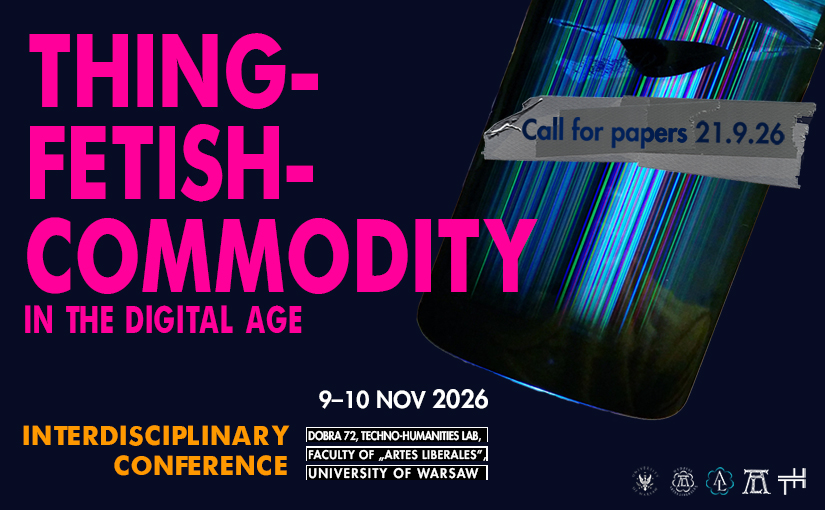
Papers and panels are invited to the interdisciplinary conference “Thing-Fetish-Commodity in the Digital Age”, which will take place in Warsaw from 9-10 November 2026. The conference, organized by the Faculty of “Artes Liberales” at the University of Warsaw (Poland), is part of the “Technology and Socialization” project directed by the Techno-Humanities Lab.

In the contemporary world, we are still surrounded by material objects – tables, books, buildings, cars, etc. However, we are increasingly surrounded by digital objects, such as online videos, photos, text files, social media profiles, electronic notifications, digital tickets, financial transactions, etc. The enigmatic nature of digital objects stems from the fact that they exist both on the screen, where we can interact with them symbolically, and in the background, in the processor. In his book On the Existence of Digital Objects, Yuk Hui notes that digital objects appear to users as visible entities, but at the programming level, they are text files; and in the operating system, they are binary codes; and finally, at the physical level, signals generated by voltage values and the results of logic gate operations. The question arises: what is a digital object and what constitutes its enigmatic life cycle, if it is hidden beneath many heterogeneous layers? Can we perceive the life cycle of a digital object as a constant dual movement – from object to data and from data to object? But what does this movement consist of, and what does it mean to be in relation to a moving digital object?

Psychoanalysis, addressing the subject-object relationship from Freud to Lacan, emphasizes that the way a person finds an object is always a consequence of an impulsive tendency, involving a lost object that must be rediscovered. Nostalgia binds the subject to the lost object. This fact marks the search for the object and the relationship with  it with the stigma of repetition. The primacy of the dialectic of search and disillusionment creates a tension in the subject-object relationship, suggesting that what is sought will never be found. It is through the search for an object of satisfaction, which is both passé and depassé, that a new object is found in a place other than the one in which it is sought. Moreover, the concept of the object in psychoanalysis is closely linked to the concept of the fetish. It is impossible not to forget that the object serves a certain complementary function in relation to something that appears as a hole, or even an abyss.

The question, then, is whether there is a common denominator between fetishes and objects. In short, from a psychoanalytic perspective, do all objects become fetishes in some sense, filling an ontological gap? In Seminar IV, titled “The Object Relation”, Jacques Lacan explicitly claims that in the world of objects, there is one that performs an absolutely and paradoxically decisive function – namely, the phallus. Lacan concludes: “In fetishism, the subject finds its object, its exclusive object, and speaks of it itself. This object is exclusive and fully satisfying because it is inanimate. In this way, the subject achieves peace, knowing that the object will not disappoint him. To love a slipper is, in fact, to have the object of one’s desires within reach.”

Axel Honneth, in his 2005 lecture entitled Reification: A New Look at and Old Idea states that in the world of the 1920s and 1930s, the concept of reification was a leitmotif of social and cultural criticism. It was Georg Lukács, combining motifs from the works of Karl Marx, Max Weber, and Georg Simmel, who reclaimed the concept of reification in a book published in 1925 titled History and Class Consciousness. After World War II, the primacy of “reification”  as a leading diagnostic concept was lost. Although these concepts persisted in the writings of the Frankfurt School – especially in the works of Theodor Adorno – the project of analyzing reification began to feel like a bygone era. The mere mention of the term “reification” was often perceived as a sign of intellectual regression. Only recently have there been increasing signs of a shift in the intellectual climate. The category of “reification” re-emerged and took center stage in theoretical discourse. But how? What new meanings did this category acquire?

Lukács did not perceive reification as a violation of moral principles, but as a characteristic feature of the capitalist form of life. The arguments he raises against the reification of social life are only indirectly normative. In this sense, one could say that Lukács’s analysis provides a socio-ontological explanation for a particular pathology occurring in the practices of life. However, it is uncertain whether we can speak of reification in the same way today. Can we justify opposition to a particular form of life by appealing to ontological or anthropological exaggerations? Indeed, it is not even clear whether, given the demands contemporary societies place on the coldly calculating intellect, we can even employ the concept of reification coherently.

Axel Honneth concludes his lecture on the long journey of the concept of reification with the conviction that “reification” is the fruit of forgetting the concept of “recognition.” Judith Butler, commenting on Honneth’s lecture, asks: if “reification” appears within social relations, does the “return” of authentic practice, which is supposed to hide from our instrumental attitudes, allow us to find a panacea for reification? For Butler the concept of “authentic bond” functions as a primal myth that precedes calculating society, a foundation of the social. Unfortunately, building bonds in conditions of dependence is not easy. It gives rise to the constant need for aggression, severance, and separation on the one hand, and on the other, dependence, helplessness, and frustration that transform into endless debt.

In this triple theoretical context defined by critical theory, psychoanalysis and digital object theory, during the conference we would like to ask:

      1. What is the relationship between: a thing (attractor), a device (a set of functions), an organism (a deliberate combination of organs), and a computing machine (a self-correcting automaton)?
      2. Do we have strong reasons to speak of the “reification of humans” when the dominant climate of our times is rather “anthropomorphization” or the “vitalization” of digital objects (Artificial Intelligence)?
      3. Do we belong not so much to some environment, surroundings, Umwelt, biosphere, but mainly to the infosphere, which is a generalization and densification of the technical environment in which man – as Luciano Floridi would say – becomes an “inforg” (informational organism) – a mediator between the devices that make up the Internet of Things?
      4. To what extent are digital objects new technical objects that serve only the optimization of business goals, not engineering ones, which is an open suggestion that modern technologies have, from the very beginning, served economics (financial transactions), and not rationality in any sense?
      5. Are there reasons to agree with Byung-Chul Han’s hypothesis, according to which things, due to their permanence, once provided support to humans, had their own history and evoked memories, while information (Non- things: smartphone, selfie, digital photo, cloud, AI) due to its transience and momentariness destabilizes human life and leads to ultraliberal regimes of self-control, self-employment and self-exploitation?
      6. Are there strong reasons to agree with Martin Heidegger’s conviction, who already in 1949, called for a return to the original meaning of the word “thing” (das Ding), meaning “to gather.” The jug for example is a thing insofar as it gathers. The secret of the thing lies in the fact that it cannot be represented as something that stands against – Gegenstand – but rather should be understood as an “assembly of beings” in which Being is revealed. The difference between an object and a thing – for Heidegger – is that the thing remains autonomous and yet constitutes the focus for a specific assemblage, while the object stands against something; the thing gathers, the object establishes distances.
      7. Today, we are observing a surge of interest in object theory. Thomas Nail, in Theory of the Object, considers the existence of the moving and chaotic Loop Object; Yuk Hui examines the forms of existence of Digital Objects, which are strictly relational, not substantial; Brian Cantwell Smith examines the boundaries of objects, arguing that the discreteness of objects has long since escaped our control. Finally, Timothy Morton analyzes “hyperobjects” – “entities of such vast temporal and spatial dimensions that they defeat traditional ideas about what a thing is in the first place”. How should we interpret this surge of interest in object theory? Is it a symptom of our ontological concern that traditional ontologies fail to describe the world around us?
      8. Are we the first bourgeois society deprived of the permanence of things, and the last to still remember this permanence? And is this permanence of things, settled in the unconscious, a contemporary form of “good reification,” because it is the thing, not the person, that remembers?


Presentations are expected to last 20 to 30 minutes. Please send abstracts of up to 300 words, attached in a Word document, along with a short bio to technologyandsocialization@gmail.com by 21 September, 2026.
Should you need any further information, do not hesitate to contact us at the same email address. All information about thethe “Technology and Socialization” project can be found here. We are looking forward to your participation and to hosting you in Warsaw.

Organizing Committee:
Professor Szymon Wróbel
Katarzyna Szafranowska, PhD
Adam Cichoń, MA

Rozstrojeni. Theodor W. Adorno o muzyce w zarządzanym świecie

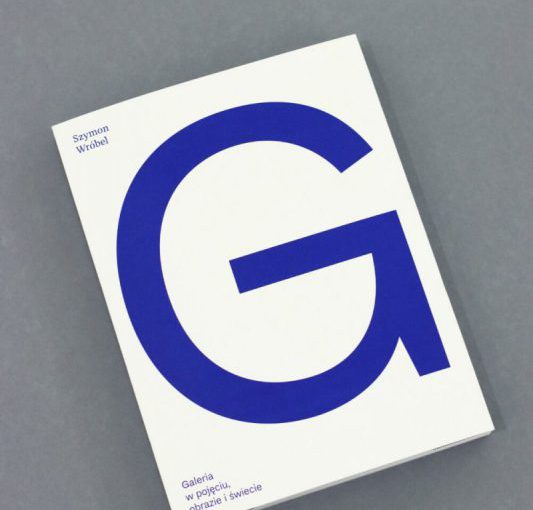
Rozstrojeni. Theodor W. Adorno o muzyce w zarządzanym świecie – najnowsza książka Szymona Wróbla z Laboratorium Techno-Humanistyki UW • Techno-Humanities Lab UW ukazała się w serii Nowa Humanistyka nakładem Wydawnictwa IBL. 

Publikacja została sfinansowana ze środków Uniwersytetu Warszawskiego oraz Fundacji „Instytut Artes Liberales”

Książka jest dostępna na stronie wydawnictwa.

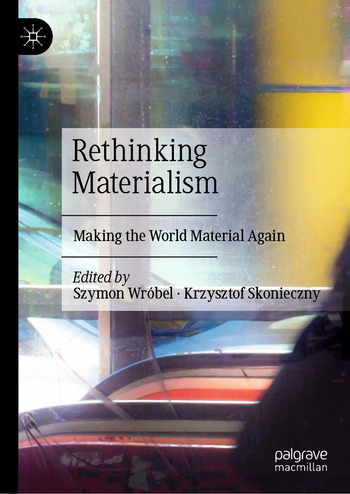
New book: Rethinking Materialism. Making the World Material Again

We are proud to announce that „Rethinking Materialism” has arrived!


The volume contains papers by: Joanna Bednarek, Maciej Bednarski, Paweł Dybel, Gabriela Filipowicz, Rodrigo Gonsalves, Daniel S. Mayor Fabre, Gregg Lambert, Alex Taek-Gwang Lee, Adam Lipszyc, Mirosław Loba, Mira Marcinów, Michał Paweł Markowski, Zoja Morochojewa, Denis Petrina, Monika Rogowska-Stangret, Krzysztof Skonieczny, Adrian Sobolewski-Kiwerski, Katarzyna Szafranowska, Piotr Wesołowski, Szymon Wróbel, Tetiana Zaiats, Oksana Dyakonenko, and Olena Sova.

Meticulously edited by Szymon Wróbel and Krzysztof Skonieczny.

„Rethinking Materialism” examines how events like the pandemic, ecological crisis, and volatile international situation have made our relationship to the world problematic, exploring new ways to theorize this condition.

More information: https://link.springer.com/book/10.1007/978-3-031-84980-0?page=2#toc

CFP: Energy and the Question of Investment

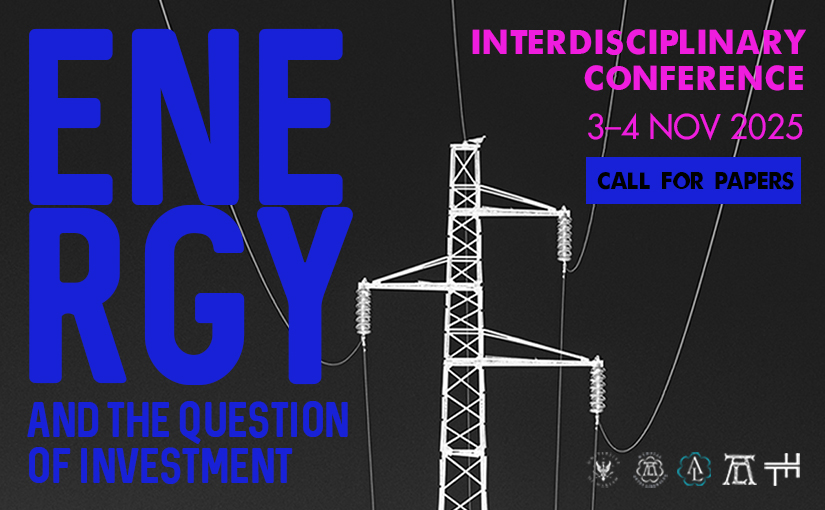
Papers and panels are invited to the interdisciplinary conference “Energy and the Question of Investment”, which will take place in Warsaw from 3-4 November 2025. The conference, organized by the Faculty of “Artes Liberales” at the University of Warsaw (Poland), is part of the “Technology and Socialization” project directed by the Techno-Humanities Lab.

Georges Bataille’s ambitious and dark thesis suggests that the essence of society is not lack but excess and that this excess produces losses, whether of war or conspicuous consumption, which ensure their vitality. From this formula, which, according to Bataille, applies to the general economy, the idea of excess and waste is constantly worth thinking through and applied to the emotional and material economy. We seem to be on the threshold of the necessity of rethinking energy and its relationship to life at all levels. It is not just about, and we are not only asking about, the types of energy that are necessary for our life – fossil energy, oil, solar energy, renewable energy, but also our libidinal energy, which is necessary for all investments in life.

In thinking about the energies and future libidinal investments of man, we would like to bypass the simple hypotheses according to which death drive lies within the life drive and describe drive-based excess, the overflowing of the drives, as a true collective suicide, in which like lemmings who, pushing and shoving in large numbers, fall off the edge of cliffs, humanity itself is in the course of unconsciously rushing towards death. Certainly, capitalism has liberated what lies buried deep within it, and that moves it with all its energy: the death drive. We do not deny that capitalism is a particular moment in human history in which technics and science are perverted towards the over-productivity of labour. But we ask: do these statements about capitalism exhaust the spectrum of knowledge and analysis about the future of human energy and investment?

As striking as the analysis of contemporary capitalism may be, they are not convincing, for it confuses the accursed share analysed by Bataille with consumerist waste. Quite unlike the unbinding of the destructive drives by calculation, characteristic of unbridled capitalism, Bataille’s general economy affirms incalculability – where the surplus, instead of submitting to calculation in reinvestment, is sacrificed and not simply destroyed. We ask in this context: is man caught up in the morbid tendency of capitalism? What does it mean that he does not just accumulate wealth, but also, above all, negative goods, waste destroying more than he accumulates? Does all investment require abandoning immediate destruction and consumption and allowing deferred action and greater future consumption?

Max Weber argued in 1905 in The Protestant Ethic and the Spirit of Capitalism that “the impulse to acquisition, pursuit of gain, of money, of the greatest possible amount of money, has in itself nothing to do with capitalism”. According to Weber, capitalism may even be identical to restraint, or at least tempering, in this irrational impulse. “But capitalism – Weber wrote – is identical with the pursuit of profit, and forever renewed profit, by means of continuous, rational, capitalistic enterprise”. These claims seem to be seconded today by the words of Adrian Johnston, who claims that capitalism’s “infinite greed” demands that individuals sacrifice their pleasures, their well-being, and even themselves to serve in human capital. Johnston argues that in capitalism, we are all subject to the imperative to accumulate in perpetuity without limits and disregard all the consequences.

We intend to ask with particular care during the conference: what is an investment in general? On the one hand, we doubt that what Freud theorizes as investment, under the name of Besetzung (cathexis), consists simply of deferring to much greater future destruction, for it is the complete opposite. In fact, the difference in the satisfaction of the drives led Freud to introduce sublimation as a condition of all investment in an object of desire. On the other hand, we have reason to doubt that the libidinal economy of the drives is reducible to what economists present as an economic investment that more closely resembles speculation about the future than investment. For, in fact, it is highly debatable whether an investment is undertaken for the purpose of future destruction. In economics or Freudian theory, investment – as Besetzung – is, instead, undertaken in order to construct the future. Cathexis means the act of arresting, the act of retaining, of conserving, the act of intercepting or of containing.

As a result, we claim that any new critique of political economy should constitute a new economy, not of the morality of capitalism. For this, we should read Adam Smith’s The Theory of Moral Sentiments, along with Spinoza, Marx, Nietzsche and Freud, in the twenty-first-century context, that is, faced with what none of these authors could ever have known or even imagined. The political economy must be an economy of moral sentiments that includes Bataille’s general economy questions and Freud’s libidinal economy. As such, today’s capitalist economy is subject to a mortifying computational totalization that makes sublimation impossible, which it replaces by takeover bids and later by the short circuits to which the disruption strategies give rise. In such an energy-wasting economy, it becomes possible to accrue huge profits, but at the cost of destroying what they exploit, as surely as the barbarians who formerly invaded civilized territories would ruin them by plundering them.

Presentations are expected to last 20 to 30 minutes. Please send abstracts of up to 300 words, attached in a Word document, with a short bio to technologyandsocialization@gmail.com by 31 August 2025. Should you need any further information, do not hesitate to contact us at the same email address. All information about the conference and the “Technology and Socialization” project can be found here. We are looking forward to your participation and to hosting you in Warsaw.

Organizing Committee:
Professor Szymon Wróbel
Dr Krzysztof Skonieczny
Dr Katarzyna Szafranowska
Mgr Adam Cichoń


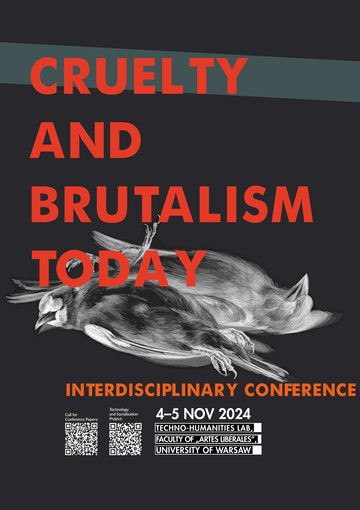
CFP: Cruelty and Brutalism Today

Papers and panels are invited for the interdisciplinary conference, “Cruelty and Brutalism Today”, which will take place in Warsaw from 4-5 November 2024. The conference is organized by the Faculty of “Artes Liberales ” at the University of Warsaw (Poland) and is part of the “Technology and Socialization” project.

Cruelty has many faces. Indeed, the cruelty of war is incomparable to the silent cruelty taking place in the privacy of our homes, and this is different from the cruelty of “cold institutions” that often use the letter of the law. However, what is disturbing is the scale of cruelty and the laughter of torturers acting not only without a sense of guilt but also with a dubious justification for the “greater necessity” of using violence.

In his book Coldness and Cruelty, Gilles Deleuze asks questions about contemporary forms of sadism and masochism. We want to reflect on the forms of the “sadistic Superego” utterly devoted to cruelty, but also the forms of the “masochistic Ego” ready for “affective contact”. The affective constellation of our world gives the impression that we are already operating outside Hegel’s dialectic of recognition, which is the dialectic of recognizing the desire of the Other. Contemporary politics has become devoid of mediation, armed with naked violence that can only escalate.

Andrew Culp claims that our era is not the “age of sad passions but of the masochistic contract that is sealed by fusing the cruel thrill of exploiting others with the self-destructive delights of being oppressed.” This masochistic contract is accompanied by widespread de-medialization, which – as it seems – ends the era of representation. Everyone wants to be present today and present their opinion without the help of a mediator. The representation gives way before the presentation. Does this state of affairs always end with a shitstorm of media that allows immediate release and which becomes – as Byung-Chul Han writes – a kind of “communication reflux” that destroys not only the order of power but also the very possibility of expressing respect. The screen is no longer a window to the world or even a frame but an information board on which data, images, inscriptions and texts move. Today, the screen is a frame for affectation and a seat of indifference. This is a severe problem.

During the conference, we will try to diagnose the sources and forms of atrocities in a world increasingly devoid of intimacy and sensitivity and increasingly filled with brutalism. As Achille Mbembe rightly argues, Brutalism today “is not an architectural style or a type of leading aesthetics, but the very essence of politics”. We argue that this brutalism goes deeper, i.e., the principles of operation of our affects, the libidinal economy. The tools of brutalism are cold (calculated) and hot (expressive) cruelty. Deleuze, citing Roberto Rossellini, concludes that art today is either lament or cruelty. Rossellini himself suggested that cruelty always consists of the violation of someone’s personality, forcing someone to be entirely and unreasonably exposed. Isn’t this the type of total exposure we see daily on our computer screens? We may live in an era of chaos, but does it justify the appeal to “pure factuality” and the policy of “final resorts”, in which the militarization of the police and the politicization of the army have turned our lives into a state of constant occupation?

Presentations are expected to be between 20 and 30 minutes. Please send abstracts of up to 300 words, attached in a Word document, with a short bio to technologyandsocialization@gmail.com by the 31st of August, 2024. Should you need any further information, do not hesitate to contact us at the same e-mail address. All information about the conference and the “Technology and Socialization” project can be found here. We are looking forward to your participation and to hosting you in Warsaw.

Organizing Committee :
Professor Szymon Wróbel
Dr Krzysztof Skonieczny
Dr Katarzyna Szafranowska
Mgr Adam Cichoń

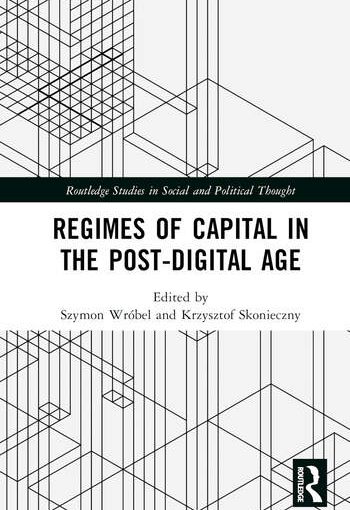
New book: „Regimes of Capital in the Post-Digital Age”

We’re delighted to announce the publication of Regimes of Capital in the Post-Digital Age edited by Szymon Wróbel and Krzysztof Skonieczny.

Regimes of Capital in the Post-Digital Age provides a view of the current state of capitalism, through the interrogation of key diagnoses offered by philosophers and social theorists.


With attention to questions about the manner in which the advent of the information age has shaped capitalism, the implications of the post- digital age for social capital, and the possible forms of resistance to the problematic aspects of capitalism, it will appeal to scholars of sociology, philosophy, and social theory with interests in critical theory, capitalist society, and digital culture.

In Regimes of Capital in the Post-Digital Age you will find essays written by:

Szymon Wróbel, Krzysztof Skonieczny, Kiarina Kordela, Gregg Lambert, Alex Taek-Gwang Lee, Adam Nocek, Paul Firenze, Zita Hüsing, Tom Tyler, Kamil Wielecki, Victor Zvonar, Oksana Dyakonenko, Tetiana Kotenko, Fabio Tononi, Maciej Bednarski, Andrzej Frelek.

Book was published by Routledge and you can find it on publisher’s website:

https://www.routledge.com/…/Wrobel…/p/book/9781032445205

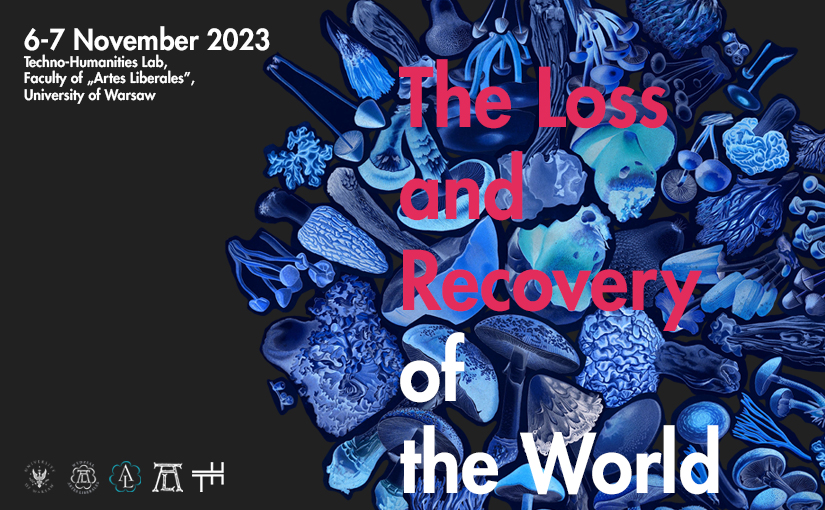
CFP: The Loss and Recovery of the World

Papers and panels are invited for the interdisciplinary conference, “The Loss and Recovery of the World”, which will take place in Warsaw from 6-7 November 2023. The conference is organized by the Faculty of Artes Liberales at the University of Warsaw (Poland) and is part of the  „Technology and Socialization” project.

The pandemic took away our „right to” and „joy of” the world. In the short time of „closure in home”, man ceased to be a “worldly being” and became an „alone animal” re-domesticated and fully controlled by “algorithmic governmentality”. The world has become a problem, rather an “assumption” than a “reality”. The main question we would like to ask during the conference is if there’s a possibility of regaining the world and the joy derived from being in the world. Is the world still “something to live in”?

For a long time, philosophy talked about man who is “of the world” and spoke about the world which is “for man”. Regardless of whether our point of departure was Husserl’s phenomenology with the postulate that „every consciousness is the consciousness of something”, or Heidegger’s onto-theology postulating the primality of „being in the world”, or the philosophy of immanence that sees „consciousness already” in the world”. Even Alain Badiou‚s mathematical ontology studies, in its second phase, the possibility of the emergence of the world and its donations, or finally, a critical theory analyzing and following Karl Marx, the limits of commodity fetishism and the transformation of the world into a „department store” governed by the principle of generalized equivalence; well, regardless of these multiple strategies and starting points, „care for the world” remains crucial.

We ask: whether today’s philosophy is too easily reconciled with the idea of a world „without man” and „not for man”? Then, after the discussion about „things in themselves” (noumens) and „things for us ” (phenomena), we will discuss „things after man” and „freed from us”. Surely the world does better „without a man” than a man “without the world”. But does this mean, however, that philosophy in its “last step” is to become a philosophy of doom, a theory of extinction or „final disappearance”, i.e., generalized nihilism?

Was the “common world” only a particular illusion created by a small and privileged part of humanity, who wanted to justify the conquest of this world, or to reduce it to a mere „collection of variables”, or the collection of all things amenable to instrumental rationality? Has the world long been merely an energy and material resource called to reveal its as-yet-unseen treasures? Does modern set theory, refusing the concept of the set of all sets, not problematize the very concept of a “finite world” and the possibility of its closure? Is the world still to be recovered? And what kind of world would we like to regain? 

At the beginning of the 20th century, György Lukács, in The Theory of the Novel, wrote – “Happy are those ages when the starry sky is the map of all possible paths-ages whose paths are illuminated by the light of the stars. Everything in such ages is new and yet familiar, full of adventure and yet their own. The world is wide and yet it is like a home, for the fire that burns in the soul is of the same essential nature as the stars; the world and the self, the light and the fire, are sharply distinct, yet they never become permanent strangers to one another, for fire is the soul of all light and all fire clothes itself in light” (Georg Lukács, The Theory of the Novel, trans. Anna Bostock, MIT Press, 1971, p. 29) Is the “happy world”, described by young Lukács, still conceivable and habitable? Is it „for us”, i.e., is it a „real possibility” for us – still “humane, all to humane”? Is the joy of „being in the world” possible at all? Or has the only possibility become „cosmic pessimism” condemning us to laments, elegies or hymns sung „after the loss of the earth”, and the only worldly mood (Stimmung) is „cosmic melancholy” as a reaction to the loss of the earth?

Presentations are expected to be between 20 and 30 minutes. Please send abstracts of up to 300 words, attached in a word document, with a short bio to technologyandsocialization@gmail.com by the 31st of August, 2023 24th of September, 2023. Should you need any further information, do not hesitate to contact us at the same e-mail address. All information related to the conference and the “Technology and Socialization” project can be found here. We are looking forward to your participation and to hosting you in Warsaw.

Organizing Committee:
Professor Szymon Wróbel
Dr Krzysztof Skonieczny
Dr Katarzyna Szafranowska
Mgr Adam Cichoń

Perpetual Peace Project

We are delighted to invite you to the conference Perpetual Peace Project which will take place in Warsaw, 9th November 2022.

The Perpetual Peace Project has never been a traditional acade-
mic philosophical debate about, for or against, Kant’s political philosophy. Instead, over the past fourteen years and three major international curatorial initiatives, we have employed the preliminary and definitive articles from Kant’s 1795 treatise Toward Perpetual Peace (Zum ewigen Frieden) to stage several major interventions between philosophers, diplomats, and artists to challenge our institutional knowledges around the idea of peace. Consequently, the firstprinciple of the 2008 initiative with the United Nations was: “The Perpetual Peace Project is predicated on the belief that no one institution or individual can clearly claim or guarantee a mastery of the concept of peace” (See Principles). Because the first event in this new phase, reinstated to address the idea of perpetual peace in the immediate context of the war in the Ukraine, is a gathering of mostly academic philosophers and theorists, we have asked our main speakers today to respond to the following provocation:

If, as Deleuze says, philosophy and only philosophy can lay claim to concepts, can philosophy today lay any claim to the concept of peace? Or has this concept or idea been relegated to what Foucault described as the “military-diplomatic apparatus” (dispositif) that belongs to the biopolitical mechanisms of “security”? Moreover, given the fact that most of the disciplinary and technical knowledges that deal with issues of global and regional security do not belong to academic philosophy, but are mostly located within the periphery of the state apparatus itself, the question of contemporary philosophy’s relation to idea of “perpetual peace” needs to be re-examined, especially in light of the war in Ukraine.

Click here to view the conference program

Wondering about Materialism

The fifth event of the Technology and Socialization Project — the conference Wondering about Materialism will take place in Warsaw, 7-8 November 2022.

The question – what is materialism today? – seems to be extremely important because we do not have any uniform concept of matter and we do not have a uniform concept of materialism. During the conference, the question about matter will be asked from three perspectives. First, from a historical perspective, we ask: what does it mean to be a “historical materialist”? Is historical materialism possible at all? Perhaps historical materialism is doomed to an alternative: it is either materialism or historicism? What does it mean that “matter” has historical form? Second, what is the relation between matter and information? The physicist John Archibald Wheeler proposed the radical it from bit (all from bit) hypothesis, according to which information underlies all matter, and every “it,” that is, every particle or energy field, is an organization of differences and therefore information. Are we ready to accept this hypothesis? Finally, we ask about the subject in the world of “intelligent matter”. What does it mean that matter is capable for self-organization? What does it mean to be a subject in the word of intelligent matter?

We hope to find answers to these and similar questions or at least clarify them during this conference.

Confirmed keynote speakers included Gregg LambertAdam J. Nocek, Nick Nesbitt, Dominic PettmanAlex Taek-Gwang Lee, Tom Tyler

Click here to view the conference program, call for papers and information about the organisers.

The conference is organized by the Faculty of “Artes Liberales” at the University of Warsaw (Poland) in collaboration with the Center for Philosophical Technologies at Arizona State University.